
Urological Stone Treatment in Vijayawada
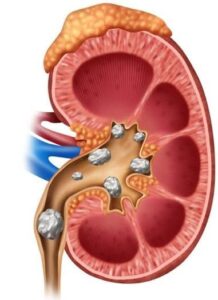
Urinary stones can develop in different parts of the urinary system, including the kidneys, ureters and bladder. If you are looking for Kidney Stone Treatment in Vijayawada or Bladder Stone Treatment in Vijayawada, understanding the symptoms and available treatment options is important. Depending on their size and location, urinary stones may cause severe pain, difficulty passing urine, blood in the urine or repeated urinary infections. Early evaluation by a urologist helps identify the stone and determine the appropriate treatment.
At Help Hospital, Vijayawada, patients can consult the Urology department for the evaluation of kidney stones, bladder stones and other urinary problems. Treatment recommendations depend on the patient’s symptoms, scan findings and overall health.
What Are Urological Stones?
Urological stones are hard deposits formed when minerals and salts in urine collect and crystallise. They may develop in the kidneys and travel through the urinary tract, or form inside the bladder when urine does not empty completely.
The main types include:
- Kidney stones: Hard deposits that form inside one or both kidneys.
- Ureter stones: Stones that move from the kidney into the ureter, the tube connecting the kidney to the bladder.
- Bladder stones: Stones that develop or remain inside the urinary bladder.
The symptoms and treatment options vary according to the location and size of the stone.
Kidney Stone Treatment in Vijayawada
Kidney stones form when certain minerals and salts in urine become concentrated and crystallise. Small stones may sometimes pass naturally, while larger stones or stones causing blockage may require medical or procedural treatment.
Common Symptoms of Kidney Stones
Symptoms may include:
- Sharp pain in the back, side or lower abdomen
- Pain that spreads towards the groin
- Blood in the urine
- Burning sensation while urinating
- Frequent urge to urinate
- Nausea or vomiting
- Difficulty passing urine
Some kidney stones may not cause noticeable symptoms until they move or obstruct urine flow.
Causes and Risk Factors
Factors that may increase the risk of kidney stones include:
- Not drinking enough fluids
- High levels of certain minerals in urine
- Family history of kidney stones
- Repeated urinary infections
- Certain dietary habits
- Some medical conditions and medications
- Previous history of kidney stones
How Are Kidney Stones Diagnosed?
A urologist may recommend investigations based on the patient’s symptoms and medical history. These may include:
- Urine examination
- Blood tests to assess kidney function
- Ultrasound scan
- CT scan when required
- Stone analysis, if a stone is passed or removed
These investigations help identify the stone’s size, location and possible effect on urine flow.
Kidney Stone Treatment Options
Treatment depends on the size, location and type of stone, along with symptoms and the patient’s overall health.
Possible treatment approaches include:
- Observation and Medical Management
Some small stones may pass without a procedure. A doctor may recommend monitoring, suitable medication and follow-up imaging.
- Extracorporeal Shock Wave Lithotripsy (ESWL)
This procedure uses focused shock waves to break certain stones into smaller fragments that can pass through urine. It is suitable only for selected stones.
- Ureteroscopy (URS)
A thin instrument is passed through the urinary passage to locate and treat stones in the ureter or, in selected cases, the kidney. Laser energy may be used to break the stone into smaller pieces.
- Percutaneous Nephrolithotomy (PCNL)
This procedure may be recommended for larger or complex kidney stones. A small access route is made through the back to reach and remove or break the stone.
The urologist decides which approach is appropriate after reviewing the scan results and the patient’s condition.
Bladder Stone Treatment in Vijayawada
Bladder stones are hard mineral deposits that form inside the urinary bladder. They may develop when the bladder does not empty completely, allowing minerals in the remaining urine to form crystals and stones.
Bladder stones can sometimes be associated with an enlarged prostate, urinary obstruction, bladder nerve problems or recurrent infections.
Symptoms of Bladder Stones
Common symptoms include:
- Pain or discomfort in the lower abdomen
- Burning or pain while urinating
- Frequent urination
- Difficulty starting urination
- Interrupted urine flow
- Blood in the urine
- Recurrent urinary tract infections
- Difficulty emptying the bladder completely
Some patients may experience discomfort that becomes more noticeable during urination or physical activity.
Causes of Bladder Stones
Possible causes include:
- Incomplete emptying of the bladder
- Enlarged prostate causing urinary obstruction
- Narrowing of the urinary passage
- Bladder nerve or muscle problems
- Recurrent urinary infections
- Presence of a foreign object or medical device in the bladder
Identifying the underlying cause is important because treating the stone alone may not prevent it from returning.
Diagnosis of Bladder Stones
Depending on the symptoms, a urologist may recommend:
- Urine tests
- Blood tests
- Ultrasound of the urinary system
- X-ray or CT imaging when required
- Cystoscopy to examine the inside of the bladder
These tests help confirm the presence of stones and identify possible causes of incomplete bladder emptying.
Bladder Stone Treatment Options
Treatment depends on the size of the stone, the patient’s symptoms and the underlying cause.
- Cystolitholapaxy
A thin instrument called a cystoscope is passed through the urethra into the bladder. The stone is broken into smaller pieces using suitable energy, such as laser or mechanical instruments, and the fragments are removed.
- Surgical Stone Removal
In selected cases, particularly when stones are very large or other conditions need surgical management, an alternative surgical approach may be considered.
- Treatment of the Underlying Cause
If bladder stones are associated with prostate enlargement or another urinary obstruction, the doctor may also evaluate and manage that condition to reduce the risk of recurrence.
When Should You Consult a Urologist?
Consult a urologist if you experience persistent pain in the back or lower abdomen, blood in the urine, repeated urinary infections, burning during urination or difficulty passing urine.
Seek urgent medical attention if you have:
- Severe pain with fever or chills
- Repeated vomiting with suspected kidney stones
- Inability to pass urine
- Blood in the urine with clots or difficulty urinating
A stone that blocks urine flow along with infection can become serious and requires prompt medical assessment.
How to Choose the Best Urologist for Kidney Stones in Vijayawada
When looking for the best urologist for kidney stones in Vijayawada, consider the following:
- Relevant qualifications and specialist training in urology
- Experience evaluating and treating urinary stones
- Ability to explain different treatment options
- Access to appropriate diagnostic investigations
- Clear discussion of the benefits and risks of procedures
- Follow-up care and guidance on preventing recurrence
The right treatment depends on the patient’s individual condition. A specialist consultation helps determine whether observation, medication or a procedure is needed.
Urological Stone Care at Help Hospital, Vijayawada
Help Hospital is a multispeciality hospital in Vijayawada, with a Urology department for the evaluation and management of urinary system conditions.
Patients experiencing kidney stone symptoms, bladder discomfort, blood in urine or other urinary problems can contact the hospital to enquire about urology consultation and available treatment options.